Japan is one of the easiest countries in the world to travel in: trains run on time, streets are safe and signs in big cities usually include English. Still, a few habits that work fine at home can cost first-time visitors time, money or a bit of embarrassment. Here are the mistakes we see most often, and what to do instead.
1. Trying to see too many cities
It is tempting to squeeze Tokyo, Kyoto, Osaka, Hiroshima, Hakone, Nara and the Japanese Alps into one short trip. Every move between cities costs you half a day: checking out, getting to the station, riding the train, finding your next hotel and checking in again. On a one-week trip, two or three bases are plenty.
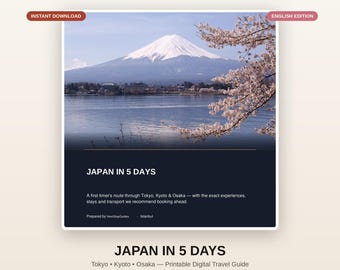
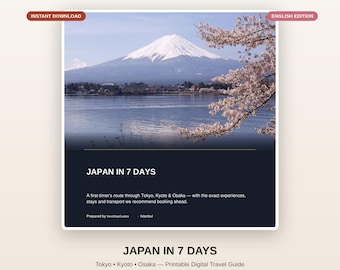
A classic first route is Tokyo, then Kyoto, then Osaka, with Nara as a day trip. If you only have five days, even that is tight — our 5-day Japan itinerary shows how to do it without wasted days, while the 7-day version adds the Nara day most people wish they had.
2. Assuming the JR Pass always saves money
The nationwide Japan Rail Pass used to be an automatic purchase. Its price rose significantly in 2023, and for many simple routes — for example Tokyo to Kyoto and back — individual tickets can now work out cheaper. The only reliable way to decide is to add up the fares for the long-distance trips you actually plan and compare that total with the pass price on the official website. We explain how to do that in Getting around Japan.
3. Relying only on cards
Card and mobile payments are far more common in Japan than they were a few years ago, especially in chain stores, department stores and hotels. But small restaurants, food stalls, temple and shrine offerings, some ticket machines and coin lockers may still be cash only. Carry some yen every day.
- ATMs at 7-Eleven convenience stores and Japan Post offices generally accept foreign cards.
- Japan uses a lot of coins, so a small coin purse is surprisingly useful.
- Keep an eye on your bank's foreign withdrawal fees and take out larger amounts less often.
4. Not getting an IC card on day one
Buying a paper ticket for every metro ride means working out fares on a map above the ticket machine, often in a crowd. A rechargeable IC card such as Suica, PASMO or ICOCA lets you simply tap in and out on trains, subways and most city buses, and pay at convenience stores and many vending machines. On an iPhone you can add Suica or PASMO to Apple Wallet; for visitors there is also a special short-term card, Welcome Suica. Set this up on your first day and city travel becomes effortless.
5. Packing a huge suitcase
Stations have stairs, trains have limited luggage space and many city hotel rooms are small. On the Tokaido, Sanyo and Kyushu Shinkansen, bags with total dimensions over 160 cm need a seat reservation with an oversized-baggage area — without one you may have to pay an extra fee on board.
Packing light matters more here than almost anywhere. Our Japan packing list covers what is actually worth bringing.
6. Forgetting that Japan uses different plugs
Japanese sockets are Type A (two flat pins), the same shape as in the USA but different from most of Europe, the UK and Türkiye. Electricity is 100 V. Phone and laptop chargers are usually fine with just a plug adapter — check the label for "100–240V" — but hair dryers and straighteners from 220–240 V countries often are not. Bring a plug adapter rather than hunting for one at the airport.
7. Arriving without mobile data
Maps, train times, restaurant reviews, translation apps and many digital tickets all need data. Free Wi-Fi exists but is patchy once you leave the hotel. Sort out an eSIM or a pocket Wi-Fi before you fly; we compare the options in Japan eSIM vs pocket Wi-Fi. If your phone supports eSIM, installing one from Airalo before departure means you have data the moment you land.
8. Not booking popular things in advance
Some experiences sell out days or weeks ahead: the Ghibli Museum, popular observation decks at sunset, teamLab exhibitions, sumo tickets, some theme parks and many well-known restaurants. Check the booking windows for anything that is a must for you and reserve early. For attraction tickets and day tours, platforms like Klook let you book online and show the ticket on your phone.
9. Planning museum days on a Monday
Many museums and some attractions in Japan close one day a week, very often on Monday (moving to Tuesday when Monday is a public holiday). Temples and gardens also tend to close around 4:30–5 pm. Check opening days while planning, not on the morning of your visit.
10. Travelling during rush hour with luggage
Tokyo and Osaka trains between roughly 7:30 and 9:30 am on weekdays can be extremely crowded. With a suitcase it is stressful for you and everyone around you. If you are changing cities, aim for late morning. For your arrival day, a pre-booked car from the airport — for example through Welcome Pickups — can be worth it after a long flight, especially with children or heavy bags.
11. Ignoring the unwritten rules
Japanese etiquette is not complicated, and people are forgiving with visitors, but a few things are worth knowing:
- Keep your voice low on trains and do not take phone calls in the carriage.
- Stand on one side of the escalator (usually left in Tokyo, right in Osaka) and follow what locals do.
- Take your shoes off where you see a step up and slippers at the entrance — in ryokan, some restaurants, temples and homes.
- Tipping is not customary. Good service is simply expected; leaving money behind can cause confusion.
- Public bins are rare. Carry a small bag for your rubbish and dispose of it at your hotel or at the bins next to convenience stores and vending machines.
- In some busy areas, eating while walking is discouraged. Eat next to the stall where you bought the food.
- Many hot springs and some gyms restrict visible tattoos. Check in advance or look for tattoo-friendly or private baths.
12. Skipping the paperwork before you land
Japan offers an online service called Visit Japan Web where you can register immigration and customs information before arrival and get QR codes to speed up the airport process. Requirements can change, so check the official information for your nationality before you travel. Also keep your physical passport with you when shopping: tax-free purchases require it, and the tax-free rules themselves have been changing, so ask in the store how it currently works.
The easiest way to avoid most of these mistakes
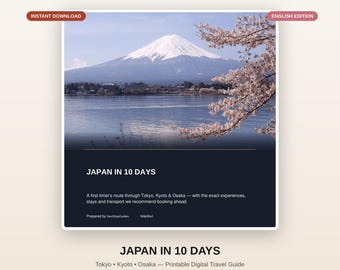
Most first-time problems come from planning on the go: too many moves, the wrong ticket, a closed museum, a sold-out attraction. A clear day-by-day plan solves most of them before you leave home. That is exactly why we made our printable Japan itineraries: routes in a logical order, hotels in three budget levels, restaurant picks and working booking links, in 5-day, 7-day and 10-day versions.
Plan the big things, leave some space for wandering, and Japan will reward you.